
The 2025 World VR Industry Conference held a special docking meeting on "VR+Low altitude Economy"

On October 20th, the "VR+Low altitude Economy Special Matchmaking Meeting" of the 2025 World VR Industry Conference was held. The theme of this special docking meeting is "Virtual Reality Integration · Intelligent Airspace Control - VR Technology Empowering High quality Development of Low altitude Economy". It is jointly organized by the National Engineering Laboratory of Virtual Reality/Augmented Reality Technology and Application (Beihang University), Zhongguancun Smart Artificial Intelligence Industry Alliance, Jiangxi Fusion Technology Research Institute, China Telecom Jiangxi Branch, and Beihang University Jiangxi Research Institute, attracting more than 150 offline government, enterprise, academic and research representatives, covering multiple entities such as government agencies, academic institutions, leading enterprises, international organizations, investment institutions, and mainstream media.
In the keynote speech, Shen Changxiang, an academician of the CAE Member, highlighted the core position of network security in the development of low altitude economy with the title of "Building a Secure and Credible New Ecology of Low altitude Economy with Autonomous and Credible Computing". He proposed that only through autonomous and controllable trusted computing technology can the security threats faced by low altitude equipment such as drones be fundamentally solved.
Kasim Tefari, Chairman of the Arab China Cooperation and Development Association, gave a speech on the theme of "Shared Horizon: Creating a Future of Digital and Low altitude Innovation", calling for the joint construction of the "Digital Air Silk Road", promoting deep cooperation between China and Arab countries in the fields of VR and low altitude economy, and jointly exploring global markets.
Nicom Douglas Obadia, Vice Chairman of the China Wuhan Nigeria Association, elaborated on "Virtual Reality+Low Altitude Economy - Smarter, Safer, and More Connected", pointing out that VR technology can provide key support for low altitude flight, such as simulation training, path planning, and urban integration, and is an important path to achieve low altitude intelligence.
Yu Jian, Vice President of the China Information Association, approached from the perspective of embodied intelligence and proposed that "training grounds" are the key infrastructure for promoting the landing of robots and low altitude intelligent devices. He introduced China's layout and goals in the construction of embodied intelligent training fields, emphasizing its important role in promoting industrial digital transformation.
Huang Jianfei, President of Guangdong Beidou Mobile Internet of Things Industry Research Institute, proposed the concept of "high-altitude industry" around the theme "Lighting up the high-altitude industry with" VR+"and breaking through the low altitude economy". He pointed out that VR and AI platforms are key gateways connecting individuals and aerial services, and will promote the digital evolution from "carbon based people" to "silicon-based people".
Associate Professor Lei Xiaoyong of Beihang University believes that talent first is the key to the development of low altitude economy. As a traditional and rapidly developing field, helicopter simulators are crucial and need to highly reproduce the real flight environment to enhance training value. VR technology is feasible in basic training, but there are still bottlenecks such as resolution and data interaction in high-level training.
Shuaibo, the director of Jiangxi Fusion Technology Research Institute, showcased the institute's systematic solutions in low altitude security, drone control, and emergency command, emphasizing the value of VR technology in achieving "integrated air ground" three-dimensional prevention and control.
Wu Aijun, General Manager of China Telecom Unmanned Technology Co., Ltd., shared China Telecom's practice in the construction of low altitude intelligent networking systems, including innovative products such as the "Wing Fly" low altitude flight service platform and the Tianyi low altitude card.
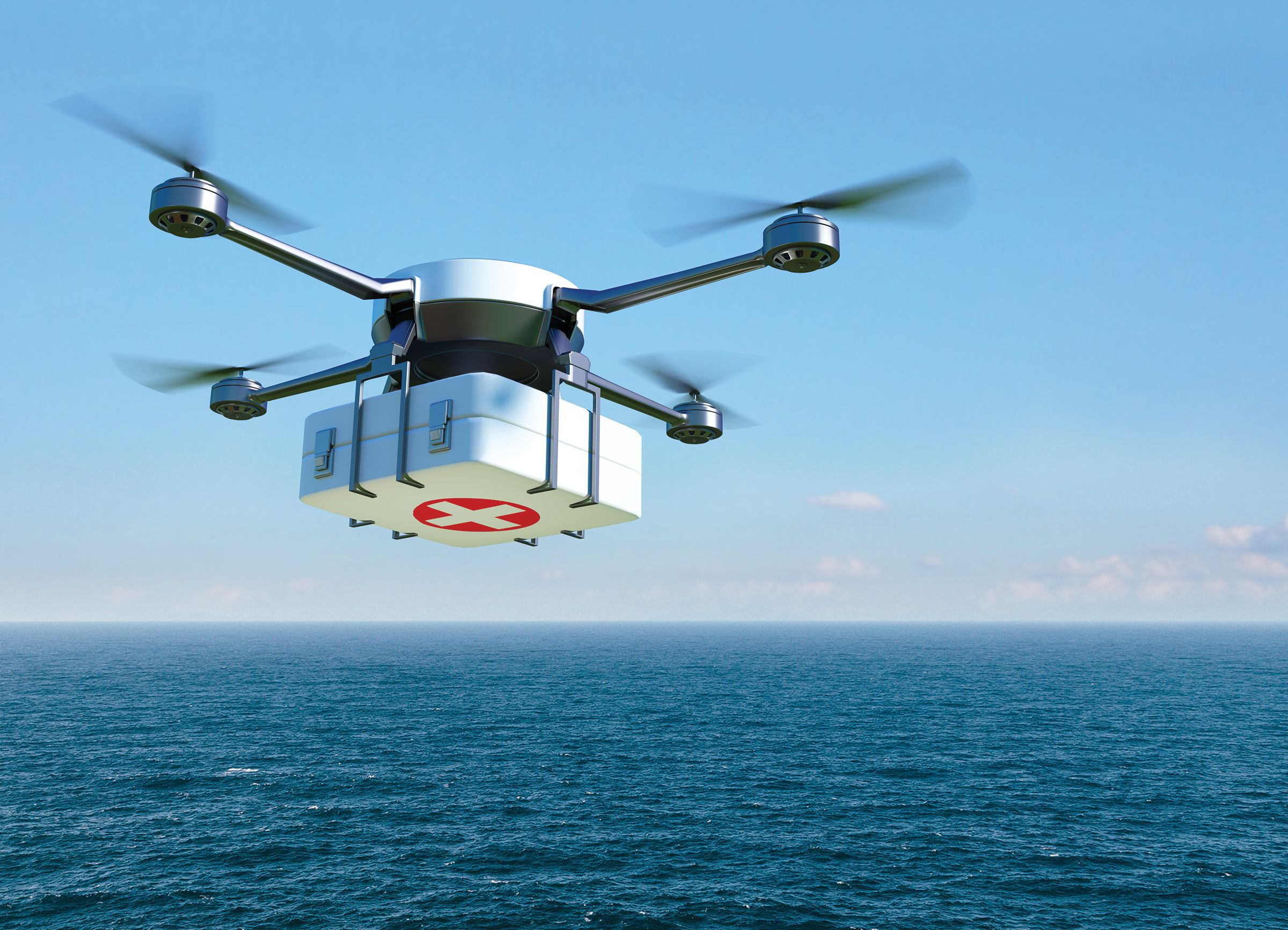
In the industry docking stage, Li Yan, Deputy Secretary of China General Consulting Investment Co., Ltd. and Chairman of the Hainan Center for National Science and Technology Achievement Transfer, introduced the five major industrial modules of low altitude economy, emphasizing the need to promote project implementation based on local conditions, and proposed the needs for "emergency medical rescue" and "search and rescue".
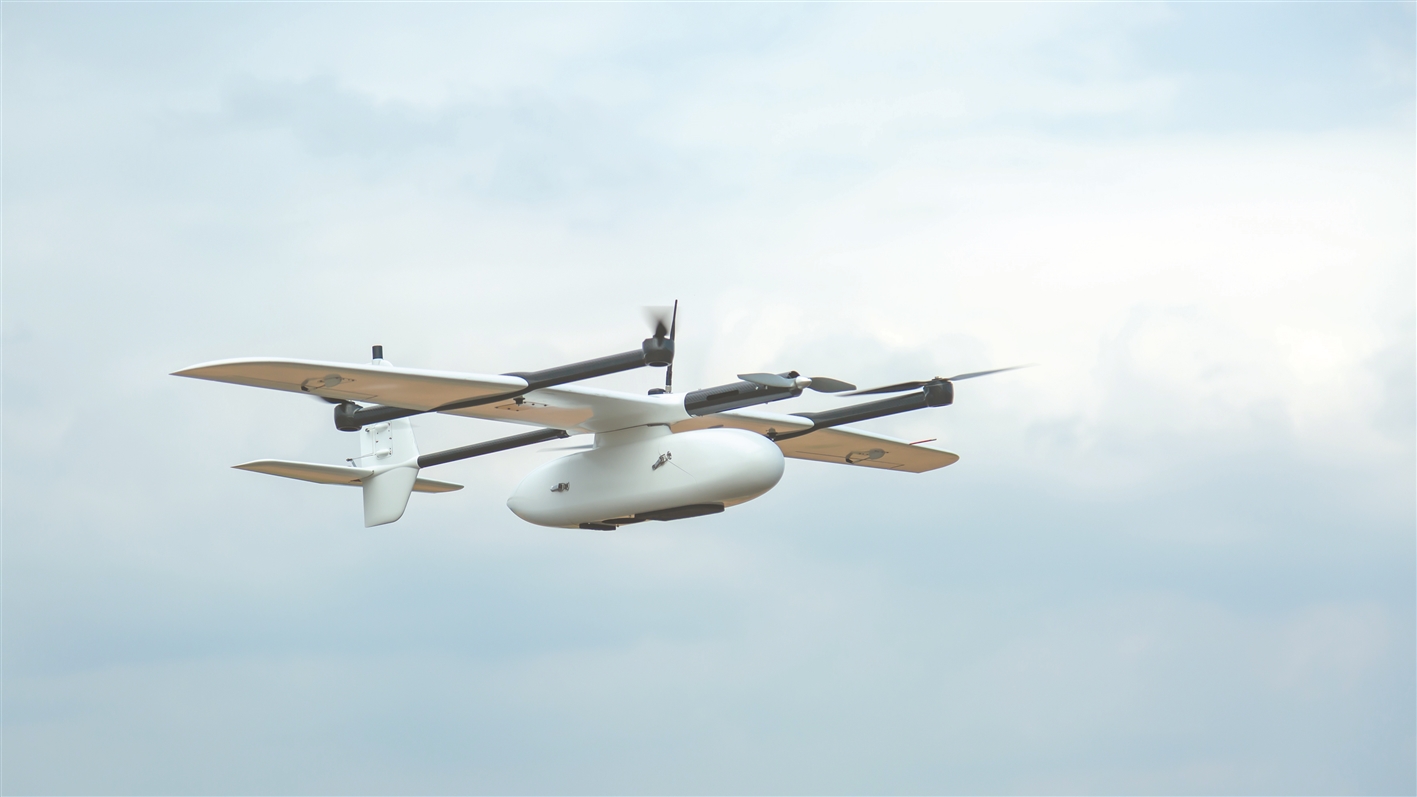
Hu Yiqiang, co-founder of Weixin Aerospace Company, as a demand response party, showcased the world's first 7-seater 3-ton eVTOL aircraft and shared its application prospects in medical rescue, urban transportation and other scenarios, providing new ideas for the commercialization of low altitude economy.
In response to the demand for low altitude economic layout in Jiangxi, the docking meeting also held the launch event of Jiangxi Telecom's "Wing Fly Low Altitude Flight Service Platform". According to Liu Yong, the director of the main research institute of China Telecom Emergency Industry Research Institute, the platform can provide full process services such as three-dimensional display of airspace and route planning. It can also support multiple scenarios such as emergency and forest defense through all-weather monitoring, helping Jiangxi's low altitude economy achieve the goal of "flying steadily, being manageable, and developing well".
At the end of the meeting, around the theme of "How VR can solve the pain points of low altitude economic development", Jin Gang, Executive President of Beifei Zhihang (Zhejiang) Technology Co., Ltd., He Jia, General Manager of Xin Guomai (Jiangxi) Virtual Reality Technology Co., Ltd., Tang Huiqiong, Chairman of Zhuhai Zhongke Huizhi Technology Co., Ltd., and Chen Jiong, Founder of Shenzhen Lingju Technology Co., Ltd. discussed and provided suggestions for industrial development.
The conference came to a close in a lively atmosphere. The attendees unanimously agreed that the integration of VR and low altitude economy is not only an inevitable trend in technological development, but also an important path to promote the development of new quality productivity and build a modern industrial system. This docking meeting has provided an efficient collaboration platform for all parties involved in government, industry, academia, research, and application, which will accelerate the conceptual implementation of "VR+low altitude economy" and usher in a new era of low altitude intelligence.