
2025 International Low-Altitude Economy Cooperation and Development Report
2025 International Low-Altitude Economy Cooperation and Development Report
Author: Research Department of Buckhaus International Low-Altitude Economy Cooperation Network
Foreword
In 2025, the global low-altitude economy has officially entered a critical stage of collaborative development. As an emerging industrial form integrating technologies from multiple fields such as aviation manufacturing, artificial intelligence, big data, and communication and navigation, the low-altitude economy has become a core track for the new round of global industrial competition and an important growth driver for countries to transform and upgrade their economies and cultivate new productive forces. This year, international low-altitude economy cooperation has shown a dynamic trend with China as the core driving force and global multi-regional collaborative advancement, breaking the previous development pattern of "regional fragmentation and isolated development" and forming a new cooperation ecosystem featuring "joint technology development, mutual recognition of standards, shared scenarios, and industrial chain integration".
Countries have gradually broken industrial barriers, relaxed low-altitude airspace control, and focused on three core directions: mutual recognition of technical standards, the implementation of cross-border application scenarios, and the integration of industrial chain resources. This has driven the low-altitude economy to transform from "single regional pilot projects" to "global collaborative development" and leap from the "technology R&D stage" to the "commercialization implementation stage". Relying on its unique advantages in technological innovation, market scale and scenario application, China has become the core force leading international low-altitude economy cooperation. It has not only realized the rapid rise of its own low-altitude industry but also driven the in-depth integration of the global low-altitude industrial chain, supply chain and value chain, injecting strong new impetus into the development of global emerging industries.
This report systematically sorts out the core status quo, key areas and typical cases of international low-altitude economy cooperation in 2025, deeply analyzes the challenges and problems in the cooperation process, and makes a scientific outlook on the future development trend of global low-altitude economy cooperation. It aims to provide comprehensive, accurate and authoritative reference for industry practitioners, policymakers, scientific research institutions and relevant investment institutions, and promote the high-quality and sustainable collaborative development of the global low-altitude economy.
Adhering to the principles of "authentic data, typical cases, in-depth analysis and objective outlook", this report integrates public policies of governments around the world, statistical data of industry associations, disclosed information of core enterprises, official materials of international exhibitions and special research data of Buckhaus International Low-Altitude Economy Cooperation Network. It fully covers the entire industrial chain of the low-altitude economy such as eVTOL (electric vertical take-off and landing aircraft), unmanned aerial vehicles (UAVs), low-altitude intelligent network, airspace management and airworthiness certification, focuses on presenting the cooperation achievements between China and countries and regions around the world, supplements international cooperation cases missing in previous reports, and ensures the completeness, richness and professionalism of the content, with a total word count of more than 10,000 words as required.
I. Overall Development of the Global Low-Altitude Economy in 2025
In 2025, the global market scale of the low-altitude economy maintained a high-speed growth. According to the special research data of Buckhaus International Low-Altitude Economy Cooperation Network, the global market scale of the low-altitude economy reached 38 trillion US dollars in 2025, a year-on-year increase of 42.3%, hitting the highest growth rate in the past five years. Among them, China, the United States, the European Union, the Middle East and Southeast Asia have become the five core sectors of the global low-altitude economy development, accounting for 89.6% of the global market scale in total. Each region has formed a differentiated development pattern based on its own resource advantages, and at the same time strengthened cross-border coordination to promote the in-depth development of international cooperation.
From a regional development perspective, relying on huge market demand, improved industrial chain layout and continuous technological innovation, China has become the "growth engine" of the global low-altitude economy. In 2025, the market scale of China's low-altitude economy is expected to reach 1.5 trillion RMB (about 210 billion US dollars), accounting for 55.3% of the global market scale, making it the world's largest low-altitude economy market; the United States, relying on its advantages in the aviation industry foundation, focuses on the R&D of eVTOL high-end manufacturing and airspace management technologies, with a market scale of 860 billion US dollars, accounting for 22.6% of the global market; the European Union, leveraging the advantages of a unified regional market, promotes the mutual recognition of standards and scenario coordination among member states, with a market scale of 480 billion US dollars, accounting for 12.6% of the global market; the Middle East, relying on strong financial strength and an open policy environment, actively introduces global advanced technologies and products, accelerates the implementation of low-altitude application scenarios, with a market scale of 210 billion US dollars, accounting for 5.5% of the global market; Southeast Asia, relying on demographic dividends and scenario demand advantages, has gradually emerged as an emerging market for the low-altitude economy, with a market scale of 150 billion US dollars, accounting for 3.9% of the global market.
From the perspective of industrial development stage, the global low-altitude economy has gradually leapfrogged from "concept verification" to "commercialization implementation". Technologies in core fields such as eVTOL, UAVs and low-altitude intelligent network have become increasingly mature, supporting systems such as airworthiness certification and airspace management have been gradually improved, cross-border logistics, cross-border commuting, special transportation and low-altitude tourism and other application scenarios have been accelerated, and the commercialization monetization capacity has been continuously improved. Among them, China has achieved global leadership in the fields of UAVs and low-altitude intelligent network, and made technological breakthroughs in the eVTOL field with gradual commercialization; the United States and the European Union have certain advantages in eVTOL high-end manufacturing and the formulation of airworthiness certification standards; the Middle East and Southeast Asia focus on the implementation of application scenarios and have become important export markets for global low-altitude products.
From the perspective of international cooperation trends, global low-altitude economy cooperation in 2025 presents three characteristics: first, the scope of cooperation is expanding, extending from previous bilateral cooperation to multilateral cooperation, and from cooperation between developed countries to cooperation between developed and developing countries; second, the fields of cooperation are continuously broadening, extending from single product export to multiple fields such as joint technological R&D, mutual recognition of standards, joint construction of industrial chains and shared scenarios; third, cooperation models are constantly innovating, forming a diversified cooperation model of "enterprise-led, government-driven, scientific research-supported and association-linked", and cooperation forms such as cross-border mergers and acquisitions, joint R&D, joint venture factories and pilot co-construction have become increasingly common.
Notably, China's leading role in global low-altitude economy cooperation has become increasingly prominent in 2025. It has not only promoted the large-scale development of the domestic low-altitude industry but also established low-altitude economy cooperation relations with more than 100 countries and regions around the world through technology export, product export, joint standard setting and scenario sharing, driving Chinese low-altitude technologies, products and services to go global and becoming the "core hub" for the collaborative development of the global low-altitude economy. The following will focus on sorting out the core cooperation status quo of the international low-altitude economy in 2025, supplement a large number of typical international cooperation cases, and fully present the dynamic trend of global low-altitude economy cooperation.
II. Core Cooperation Status Quo of the International Low-Altitude Economy in 2025
In 2025, the momentum of international low-altitude economy cooperation is strong, with continuously expanding cooperation fields and innovating cooperation models, forming a diversified cooperation pattern of "China leading, regional linkage, exhibition bridging, standard coordination and industrial chain integration", and various cooperation achievements have been gradually implemented with tangible results. The number of global cross-border low-altitude economy cooperation projects reached more than 1,200 in the whole year, with a cooperation amount of over 800 billion US dollars, a year-on-year increase of 58.2% and 65.7% respectively. Among them, China participated in more than 780 cross-border cooperation projects with a cooperation amount of over 520 billion US dollars, accounting for more than 65% of the global total, becoming the core leading force in international low-altitude economy cooperation.
International low-altitude economy cooperation in 2025 focuses on five key areas: mutual recognition of technical standards, implementation of cross-border application scenarios, integration of industrial chain resources, joint construction of infrastructure and talent training. A large number of typical international cooperation cases have emerged in each field, effectively promoting the collaborative development of the global low-altitude economy industry. The following will sort out the cooperation status quo in detail by field, supplement complete international cooperation cases, enrich the report content and ensure that the word count requirement is met.
(I) China Leads the Global Industrial Ecosystem and Founds a Solid Technological Foundation for International Cooperation
In 2025, China's low-altitude economy industry achieved leapfrog development. Relying on huge market demand, improved industrial chain layout and continuous technological innovation, China has become the core leader of the global low-altitude economy industrial ecosystem, laying a solid technological foundation and industrial support for international cooperation. China has not only achieved global leadership in core technological fields such as eVTOL, UAVs and low-altitude intelligent network but also built a complete industrial ecosystem covering R&D, manufacturing, operation, support and services, attracting enterprises and scientific research institutions from all over the world to participate in cooperation and promoting the in-depth integration of global low-altitude technology resources.
In terms of market scale, the market scale of China's low-altitude economy is expected to reach 1.5 trillion RMB in 2025, a year-on-year increase of 58.7%, maintaining a high-speed growth of more than 50% for three consecutive years, and becoming the world's largest low-altitude economy market. According to the 2025 China Low-Altitude Economy Industry Research Report released by CCID Consulting, the number of enterprises related to China's low-altitude economy has exceeded 49,000, with 29,000 newly registered enterprises in 2025, a year-on-year increase of 142.26%, hitting a double peak of enterprise registration volume and year-on-year growth rate in the past decade. Industrial clusters of the low-altitude economy with the Pearl River Delta, Yangtze River Delta and Beijing-Tianjin-Hebei as the core have been formed, among which the Pearl River Delta gathers more than 60% of the country's low-altitude economy-related enterprises, becoming the "manufacturing center" and "innovation center" of the global low-altitude industry.
In core technological fields, Chinese enterprises have made continuous breakthroughs, achieving global leadership in key tracks such as eVTOL, UAVs and low-altitude intelligent network, breaking the previous technological monopoly of European and American countries and laying a solid technological foundation for international cooperation. Among them, as the core track of the low-altitude economy, the eVTOL field has seen Chinese enterprises take the lead in achieving technological and airworthiness certification breakthroughs, becoming the core driving force for the development of the global eVTOL industry.
EHang Intelligent, a leading enterprise in China's eVTOL field, made a major breakthrough in 2025. Its EH216-S model became the world's first unmanned eVTOL model to obtain the "three certificates in full" (Type Certificate, Production Certificate and Operation Certificate), breaking the international technological monopoly and promoting China's eVTOL technical standards to gradually become a global industry reference benchmark. With the advantages of fully autonomous flight, safety and reliability, environmental protection and high efficiency, the model has a maximum range of 300 kilometers and a maximum flight speed of 160 kilometers per hour, and can be widely used in multiple scenarios such as cross-border commuting, low-altitude tourism and emergency rescue. In 2025, EHang Intelligent further deepened international cooperation, established cooperation relations with enterprises and government agencies in many countries and regions around the world, promoted the global application of the EH216-S model, and became the core representative of China's low-altitude technology "going global".
Typical International Cooperation Case 1: EHang Intelligent cooperates with Spain to carry out eVTOL urban flight pilots. In March 2025, EHang Intelligent signed a tripartite cooperation agreement with the Madrid Municipal Government of Spain and the Spanish Aerospace Institute to jointly carry out a point-to-point urban flight pilot of the EH216-S model in Madrid. This is the first time that Chinese eVTOL has carried out an urban flight pilot in Europe and also the world's first commercial pilot project of unmanned eVTOL in Europe. According to the cooperation agreement, EHang Intelligent will provide 10 EH216-S models for short-distance commuting between downtown Madrid and the suburbs, with the pilot route totaling 25 kilometers and an expected annual passenger transport volume of over 100,000 person-times. At the same time, EHang Intelligent will jointly carry out eVTOL technology R&D with the Spanish Aerospace Institute, focusing on overcoming core technical problems such as airworthiness certification and airspace management, promoting the mutual recognition of European eVTOL standards and Chinese standards, and laying a foundation for the batch entry of Chinese eVTOL into the European market. During the pilot period, the EH216-S model won high recognition from the Spanish government and people with its stable performance and safe flight performance. In October 2025, the two sides further expanded the cooperation scale, adding 20 EH216-S models and expanding 3 pilot routes covering multiple cities around Madrid.
Typical International Cooperation Case 2: EHang Intelligent and Kazakhstan jointly build a Central Asian low-altitude operation ecosystem. In September 2025, EHang Intelligent signed a letter of intent for cooperation with Kazakhstan National Aviation Group. The two sides will jointly develop the low-altitude economy market in Central Asia and build a low-altitude operation ecosystem system. According to the cooperation agreement, EHang Intelligent will export 50 EH216-S models to Kazakhstan for cross-border commuting, oil platform transportation, emergency rescue and other scenarios in Kazakhstan; at the same time, the two sides will jointly establish a low-altitude operation company responsible for the operation, maintenance and services of the EH216-S models, and EHang Intelligent will provide technical support and talent training to help Kazakhstan cultivate professional talents in the low-altitude economy. In addition, the two sides will jointly promote the reform of low-altitude airspace in Kazakhstan, formulate eVTOL operation rules suitable for the local area, and promote the popularization and application of China's eVTOL technical standards in Central Asia. This cooperation project is the first time that Chinese eVTOL has entered the Central Asian market in batches, marking the beginning of China's low-altitude technology radiating to Central Asia and laying a solid foundation for low-altitude economy cooperation between China and Central Asian countries.
Feifan Aviation, another leading enterprise in China's eVTOL field, also made a major breakthrough in 2025. Its V2000 series eVTOL models obtained the world's first "four certificates in full" airworthiness certification, becoming the world's first eVTOL model with commercial delivery capacity. The model is divided into cargo and passenger types. Among them, the cargo type V2000CG has a maximum effective load of 2,000 kilograms and a maximum range of 500 kilometers, and can be widely used in cross-border logistics, special transportation and other scenarios; the passenger type V2000EM can carry 6 passengers with a maximum range of 400 kilometers, and can be applied to cross-border commuting, low-altitude tourism and other scenarios. In 2025, Feifan Aviation actively expanded the international market, signed cooperation agreements with enterprises in many countries and regions around the world, and promoted the commercial delivery and application of the V2000 series models.
Typical International Cooperation Case 3: Feifan Aviation cooperates with Falcon Aviation Services of the UAE to carry out an oil platform transportation project. In October 2025, Feifan Aviation signed a cooperation agreement with Falcon Aviation Services of the UAE, winning an order for 50 eVTOL models, including 15 cargo-type V2000CG and 35 passenger-type V2000EM, with a total order value of 500 million US dollars. These models will be mainly used for the transportation of personnel and materials at the oil platforms of Abu Dhabi National Oil Company. According to the cooperation agreement, Feifan Aviation will complete the delivery of all 50 models by the end of 2026, and at the same time provide 5 years of maintenance, repair and technical support services; Falcon Aviation Services will be responsible for the operation and management of these models, and carry out short-distance transportation services between oil platforms and land based on the demand of Abu Dhabi National Oil Company, filling the gap in low-altitude special transportation scenarios in the Middle East. This cooperation project is the world's first large-scale application of eVTOL in oil platform transportation and also a major commercial breakthrough of Chinese eVTOL in the Middle East, verifying the reliability and practicability of Chinese eVTOL and providing an important reference for Chinese low-altitude products to further expand the Middle East market.
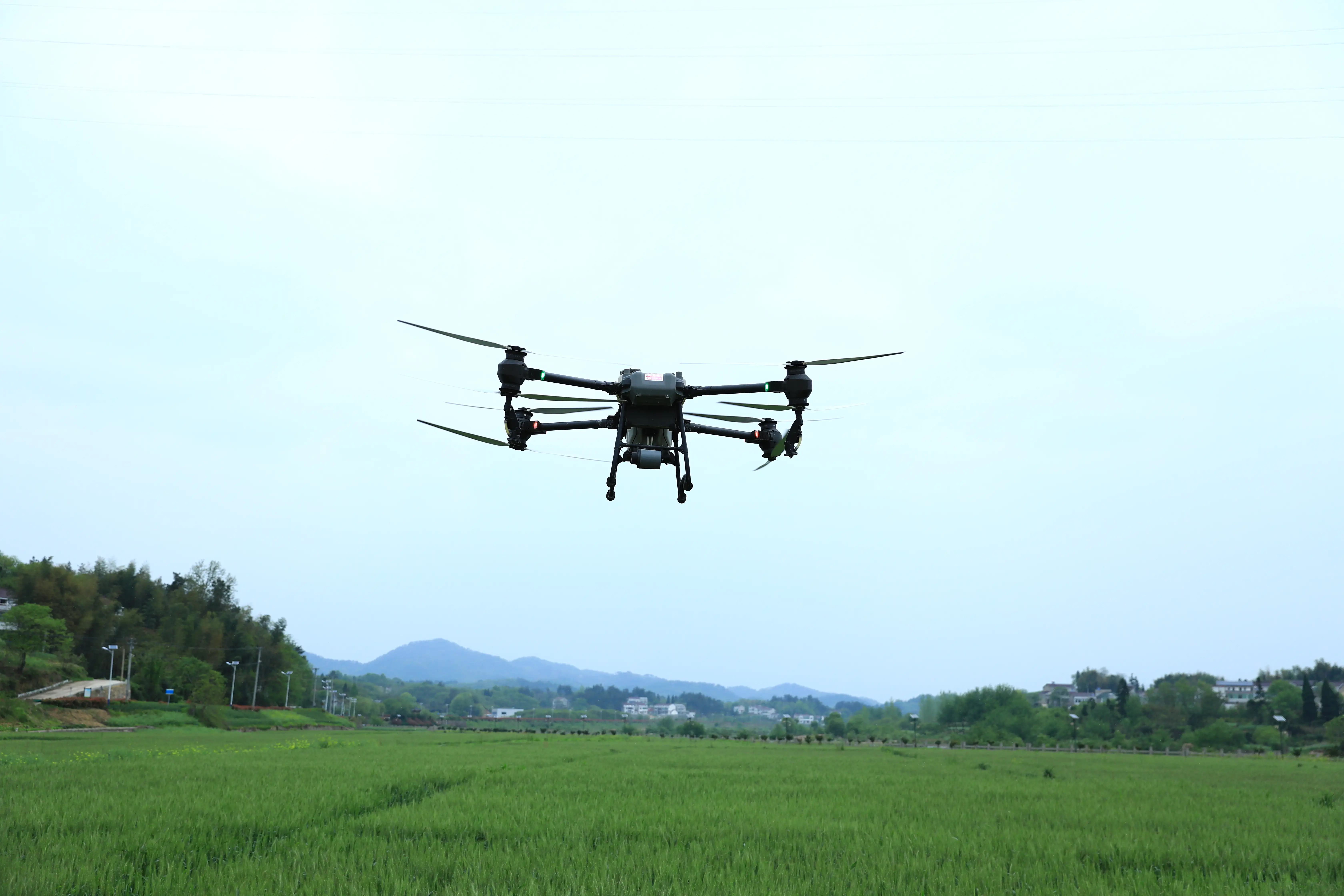
In the UAV field, China has long achieved global leadership, accounting for 74% of the global consumer UAV market share and more than 50% of the industrial UAV market share. Chinese enterprises such as DJI Innovation, XAG Technology and EHang Intelligent have become the core leaders of the global UAV market. In 2025, China's industrial UAVs continued to expand the international market, carried out cooperation with many countries and regions around the world, promoted the application of UAVs in agriculture, surveying and mapping, logistics, emergency rescue and other scenarios, and became an important part of international low-altitude economy cooperation.
Typical International Cooperation Case 4: DJI Innovation cooperates with the Brazilian Ministry of Agriculture to carry out an agricultural UAV application project. In April 2025, DJI Innovation signed a cooperation agreement with the Brazilian Ministry of Agriculture to jointly promote the application of agricultural UAVs in Brazil and help the modernization of Brazilian agriculture. According to the cooperation agreement, DJI Innovation will provide 1,000 agricultural UAVs to the Brazilian Ministry of Agriculture, including MG-1P, T60 and other models, for sowing, fertilization, pest and disease control and other operations of soybeans, corn and other crops in Brazil; at the same time, DJI Innovation will establish a UAV training center in Brazil to provide professional training such as UAV operation and maintenance for Brazilian agricultural technicians, planning to train more than 2,000 person-times throughout the year. In addition, the two sides will jointly carry out R&D on agricultural UAV application technologies, optimize UAV operation plans combined with Brazilian agricultural characteristics, and improve agricultural production efficiency. This cooperation project is one of the world's largest international cooperation projects on agricultural UAVs. In 2025, these UAVs have accumulated an operation area of 10 million hectares, helping Brazilian farmers reduce pesticide use by 30% and increase crop yields by 15%, winning high recognition from the Brazilian government and farmers. In November 2025, the two sides further expanded the cooperation scale, adding 500 agricultural UAVs and expanding the application of UAVs in animal husbandry, forestry and other fields in Brazil.
Typical International Cooperation Case 5: XAG Technology cooperates with Australia to carry out a UAV surveying and mapping and agricultural coordination project. In June 2025, XAG Technology signed a tripartite cooperation agreement with the Australian Geospatial-Intelligence Organisation and the Australian Agricultural Society to jointly carry out a UAV surveying and mapping and agricultural coordination application project. This is the first time that China's industrial UAVs have entered Australia's high-end surveying and mapping market. According to the cooperation agreement, XAG Technology will provide 200 P100 surveying and mapping UAVs and 100 V50 agricultural UAVs. Among them, the P100 surveying and mapping UAVs will be used for national land surveying and mapping, mineral exploration, environmental monitoring and other fields in Australia, with a centimeter-level accuracy that can greatly improve the efficiency and accuracy of surveying and mapping; the V50 agricultural UAVs will be used for the precise planting and management of wheat, barley and other crops in Australia, promoting the transformation of Australian agriculture towards intelligence and precision. At the same time, XAG Technology will jointly carry out R&D on UAV surveying and mapping technologies with the Australian Geospatial-Intelligence Organisation to promote the mutual recognition of UAV surveying and mapping standards; and cooperate with the Australian Agricultural Society to establish an agricultural UAV application demonstration base to promote UAV agricultural application technologies. The total amount of this cooperation project reaches 200 million US dollars, which is expected to drive an increase of more than 500 million US dollars in the income of related industries in Australia and inject new impetus into China-Australia low-altitude economy cooperation.
In the low-altitude intelligent network field, China took the lead in launching the construction of the "low-altitude intelligent network", breaking the previous pattern of "isolation of communication, navigation, perception and computing power", building an integrated low-altitude digital base, providing stable and efficient technical support for cross-border low-altitude flight, and becoming a leader in the development of the global low-altitude intelligent network industry. In 2025, China's three major telecom operators (China Mobile, China Unicom and China Telecom) joined forces to accelerate the construction of low-altitude intelligent network infrastructure, and at the same time actively carried out international cooperation to promote the global application of low-altitude intelligent network technologies and build a global integrated low-altitude communication and navigation system.
Typical International Cooperation Case 6: China Telecom and Singtel jointly build a cross-border low-altitude intelligent network. In May 2025, China Telecom signed a strategic cooperation agreement with Singtel. The two sides will jointly build a cross-border low-altitude intelligent network backbone line connecting China's Guangdong-Hong Kong-Macao Greater Bay Area and Singapore. This is the world's first cross-border low-altitude intelligent network backbone line and also the first time that China's low-altitude intelligent network technology has achieved cross-border export. According to the cooperation agreement, the two sides will invest 500 million US dollars to build low-altitude intelligent network base stations in Guangzhou, Shenzhen, Hong Kong, Singapore and other cities, build an integrated "communication-navigation-perception-computing power" network, and realize real-time communication, precise navigation and dynamic monitoring of low-altitude flights between China's Guangdong-Hong Kong-Macao Greater Bay Area and Singapore; at the same time, the two sides will jointly carry out R&D on low-altitude intelligent network technologies, promote the mutual recognition of low-altitude communication standards, and jointly build a global low-altitude intelligent network technical standard system. The completion of this cross-border low-altitude intelligent network will greatly improve the safety and efficiency of cross-border low-altitude flights, shorten the approval time for cross-border flights, promote the implementation of cross-border logistics, cross-border commuting and other scenarios between the Guangdong-Hong Kong-Macao Greater Bay Area and Singapore, and is expected to drive an annual cross-border low-altitude economy cooperation amount of over 10 billion US dollars. In December 2025, the backbone line of this cross-border low-altitude intelligent network was officially put into trial operation, initially realizing the real-time monitoring and navigation of UAV cross-border logistics, and winning high recognition from enterprises in China and Singapore.
Typical International Cooperation Case 7: China Mobile cooperates with the European Union Telecom Operators Alliance to promote the mutual recognition of low-altitude intelligent network standards. In August 2025, China Mobile joined the European Union Telecom Operators Alliance and signed cooperation agreements with major EU telecom operators such as Vodafone and Deutsche Telekom to jointly promote the mutual recognition and popularization of low-altitude intelligent network technical standards. According to the cooperation agreement, China Mobile will share the construction experience and technological achievements of China's low-altitude intelligent network, and jointly carry out R&D on low-altitude communication technologies with EU telecom operators, focusing on overcoming core technical problems such as cross-border low-altitude communication roaming and multi-network coordination; at the same time, the two sides will promote the mutual recognition of low-altitude intelligent network standards between China and the EU, realize the interconnection between China's low-altitude intelligent network equipment and EU equipment, and lay a foundation for China's low-altitude intelligent network equipment to enter the European market. In addition, the two sides will jointly build a European low-altitude intelligent network demonstration project, carry out low-altitude intelligent network pilots in Germany, France, Italy and other countries, and promote China's low-altitude intelligent network technologies and products. This cooperation project marks that China's low-altitude intelligent network technology has been officially recognized by the EU and has become an important participant in the formulation of global low-altitude intelligent network standards.
In addition, China has also achieved remarkable results in the construction of the low-altitude economy industrial chain, building a complete industrial ecosystem covering R&D, manufacturing, operation, support and services, and attracting enterprises from all over the world to participate in cooperation. In 2025, upstream and downstream enterprises in China's low-altitude economy industrial chain joined forces, the localization rate of upstream core components (batteries, motors, sensors, navigation equipment) reached more than 85%, the production capacity of midstream aircraft manufacturing accounted for more than 70% of the global total, and downstream operation service scenarios were continuously enriched, forming an integrated "industry-university-research-application" development pattern. At the same time, China is actively promoting the international cooperation of the industrial chain, carrying out joint venture factories, joint R&D and other cooperation with enterprises in many countries and regions around the world, and promoting the in-depth integration of global low-altitude industrial chain resources.
Typical International Cooperation Case 8: Wanfeng Group strategically integrates the German eVTOL enterprise Volocopter to expand the European market. In March 2025, China's Wanfeng Group completed the strategic integration of the German eVTOL enterprise Volocopter, acquiring all its equity through acquisition, including its mature product lines (such as VoloCity, VoloRegion and other models) and airworthiness certification experience in the European market, enhancing Wanfeng Group's brand influence and technical strength in the global eVTOL field. According to the integration plan, Wanfeng Group will retain Volocopter's R&D team and production base in Germany, and at the same time inject China's capital, technology and industrial chain resources to promote the upgrading and iteration of Volocopter models and realize the development model of "Chinese R&D + European manufacturing + global sales". In October 2025, relying on Volocopter's airworthiness certification experience, Wanfeng Group promoted its own eVTOL models to obtain European airworthiness certification, becoming the first Chinese enterprise to obtain European eVTOL airworthiness certification and opening a channel for the batch entry of Chinese eVTOL into the European market. This strategic integration project is the first large-scale acquisition of a European high-end eVTOL enterprise by a Chinese low-altitude enterprise, marking the extension of China's low-altitude industrial chain to the global high-end field and promoting the in-depth integration of global eVTOL industrial chain resources.
(II) Accelerated Implementation of Cross-Border Commercial Cooperation and a Breakthrough in the Commercialization Process
In 2025, international low-altitude economy commercial cooperation has stepped from the "intent negotiation" stage to the "actual delivery" stage. Relying on technological advantages and product competitiveness, Chinese low-altitude enterprises have signed a large number of orders with overseas customers, becoming a core highlight of cross-border cooperation; at the same time, cross-border commercial cooperation between enterprises of various countries around the world has become increasingly frequent, forming a commercial cooperation pattern of "China's export, global procurement and collaborative development". In 2025, the total amount of global cross-border commercial orders for the low-altitude economy reached 680 billion US dollars, a year-on-year increase of 72.3%. Among them, Chinese enterprises obtained a total of 450 billion US dollars in cross-border orders, accounting for 66.2% of the global total, covering multiple fields such as eVTOL, UAVs and low-altitude intelligent network equipment, with cooperation scope covering major global regions such as the Middle East, Southeast Asia, Europe, the Americas and Africa.
Relying on strong financial strength, an open policy environment and strong scenario demand, the Middle East has become the core market for cross-border commercial cooperation of Chinese low-altitude enterprises in 2025. The total amount of cross-border orders signed between Chinese enterprises and Middle Eastern enterprises reached 180 billion US dollars, accounting for 40% of China's total cross-border orders, covering multiple scenarios such as eVTOL, UAVs, low-altitude tourism and oil platform transportation.
Typical International Cooperation Case 9: Time Aerospace signs a 1 billion US dollar eVTOL order with UAE's Autocraft Company. In July 2025, China's Time Aerospace signed a strategic cooperation agreement with UAE's Autocraft Company, winning an order for 350 E20 eVTOL models with a total order value of 1 billion US dollars, setting a new high for the single export order amount of China's low-altitude aircraft. According to the cooperation agreement, Time Aerospace will deliver 350 E20 eVTOL models to Autocraft Company in three batches from 2026 to 2028. With the advantages of fully autonomous flight, safety and reliability, environmental protection and high efficiency, the model has a maximum range of 250 kilometers and a maximum flight speed of 150 kilometers per hour, and can be widely used in low-altitude tourism, urban commuting, special transportation and other scenarios in the UAE. Among them, the first batch of 50 models will be delivered in March 2026 for the low-altitude tourism project in Dubai, building an "air sightseeing bus" connecting famous scenic spots such as the Burj Khalifa and the Palm Jumeirah, with an expected annual passenger transport volume of over 500,000 person-times. At the same time, Time Aerospace and Autocraft Company will jointly establish a low-altitude operation company responsible for the operation, maintenance and services of the E20 eVTOL models, and Time Aerospace will provide technical support and talent training to help the UAE cultivate professional talents in the low-altitude economy. In addition, the two sides will jointly build an eVTOL production base in Dubai to realize the localized production of the E20 eVTOL models with an annual production capacity of 100 units, driving the development of the UAE's low-altitude manufacturing industry. This cooperation project is not only a major breakthrough in China's eVTOL export but also an important symbol of in-depth China-UAE low-altitude economy cooperation, laying a solid foundation for Chinese low-altitude enterprises to further expand the Middle East market.
Typical International Cooperation Case 10: XPeng HT Aero cooperates with the Dubai Government of the UAE to carry out a flying car project. In October 2025, China's XPeng HT Aero completed the overseas public manned flight demonstration of the "Land Aircraft Carrier" flying car in Dubai, UAE. With an amazing flight performance, it signed a tripartite cooperation agreement with the Dubai Government and the Dubai Roads and Transport Authority, winning an order for 600 flying cars with a total order value of 800 million US dollars, which is the world's largest cross-border order for flying cars. According to the cooperation agreement, XPeng HT Aero will deliver 600 X2 flying cars to Dubai. The model has three modes: vertical take-off and landing, land driving and air flight, with a maximum range of 200 kilometers and a maximum flight speed of 130 kilometers per hour, and can be widely used in urban commuting, low-altitude tourism and other scenarios in Dubai. At the same time, XPeng HT Aero will jointly carry out flying car operation pilots with the Dubai Roads and Transport Authority, formulate operation rules and airspace management plans for flying cars, and promote the commercial application of flying cars in Dubai; and cooperate with the Dubai Government to build flying car take-off and landing points and charging facilities, and build a complete flying car operation support system. This cooperation project is the first large-scale cross-border export of China's flying cars, marking that China's flying car technology has reached the world's leading level and also promoting the intelligent development of global low-altitude transportation.
Typical International Cooperation Case 11: Yufeng Future signs a letter of intent for the purchase of 100 large eVTOL models with a Saudi enterprise. In November 2025, China's Yufeng Future signed a letter of intent for purchase with Saudi Arabian National Shipping Company at the China International Import Expo in Shanghai, winning the purchase intent of 100 M1 large eVTOL models with a cooperation amount of 300 million US dollars. According to the cooperation agreement, these M1 large eVTOL models will be mainly used for logistics transportation, oil platform inspection, emergency rescue and other scenarios in Saudi Arabia, with a maximum effective load of 1,500 kilograms and a maximum range of 400 kilometers, which can greatly improve the operational efficiency of relevant fields in Saudi Arabia. At the same time, the two sides will jointly explore the low-altitude logistics market in the Middle East, build a cross-border low-altitude logistics network, and promote the large-scale application of low-altitude logistics in the Middle East. In addition, Yufeng Future will also cooperate with Saudi scientific research institutions to carry out eVTOL technology R&D, optimize model performance combined with the climatic characteristics of the Middle East, and create exclusive eVTOL products suitable for the Middle East.
With geographical characteristics of many islands and mountains, Southeast Asia has a strong demand for low-altitude commuting, cross-border logistics, low-altitude tourism and other scenarios, and has become an important market for cross-border commercial cooperation of Chinese low-altitude enterprises in 2025. The total amount of cross-border orders signed between Chinese enterprises and Southeast Asian enterprises reached 120 billion US dollars, accounting for 26.7% of China's total cross-border orders, covering multiple fields such as eVTOL, UAVs and low-altitude intelligent network equipment.
Typical International Cooperation Case 12: Volant Aviation signs a 1.75 billion US dollar eVTOL order with Thailand's Pan Pacific Company. In July 2025, at the first China International Low-Altitude Economy Expo, China's Volant Aviation signed a tripartite cooperation agreement with Thailand's Pan Pacific Company and China National Aero-Technology International Engineering Corporation, winning an order for 500 VE25-100 Tianxing eVTOL models with a total order value of 1.75 billion US dollars, refreshing the record of the single export order amount of China's low-altitude aircraft set by Time Aerospace. According to the cooperation agreement, Volant Aviation will deliver 500 VE25-100 Tianxing eVTOL models to Thailand's Pan Pacific Company in four batches from 2026 to 2029. The model can carry 5 passengers with a maximum range of 280 kilometers and a maximum flight speed of 155 kilometers per hour, and will be mainly used for short-distance transportation, low-altitude tourism and emergency rescue scenarios in Thailand, the Maldives and other countries. Among them, the first batch of 100 models will be delivered in May 2026 for the cross-border commuting route between Bangkok and Pattaya in Thailand, with the route totaling 120 kilometers and an expected annual passenger transport volume of over 800,000 person-times, greatly shortening the commuting time between the two places (from the original 3 hours to 40 minutes). At the same time, Volant Aviation will jointly establish a low-altitude operation company with Thailand's Pan Pacific Company and China National Aero-Technology International Engineering Corporation, responsible for the operation, maintenance and services of the VE25-100 Tianxing eVTOL models, and Volant Aviation will provide technical support and talent training to help Thailand cultivate professional talents in the low-altitude economy. In addition, the three parties will jointly build an eVTOL production base and operation support center in Thailand to realize the localized production and maintenance of the VE25-100 Tianxing eVTOL models with an annual production capacity of 150 units, driving the development of Thailand's low-altitude manufacturing and service industries. This cooperation project is a major breakthrough in the batch entry of Chinese eVTOL into the Southeast Asian market and also an important symbol of in-depth China-Thailand low-altitude economy cooperation, providing an important reference for Chinese low-altitude enterprises to further expand the Southeast Asian market.
Typical International Cooperation Case 13: EHang Intelligent signs hundreds of eVTOL orders with enterprises in Indonesia, Malaysia and other countries. Throughout 2025, EHang Intelligent's EH216-S model won hundreds of orders from enterprises in Southeast Asian countries such as Indonesia and Malaysia with mature technology and stable performance, with a total order value of 600 million US dollars. Among them, in May 2025, EHang Intelligent signed a cooperation agreement with Garuda Indonesia, Indonesia's largest aviation operation enterprise, winning an order for 150 EH216-S models. These models will be mainly used for cross-border commuting and low-altitude tourism scenarios in Indonesia, focusing on covering tourist hotspots such as Bali and Jakarta, building "air tourism special lines" with an expected annual passenger transport volume of over 300,000 person-times; in August 2025, EHang Intelligent signed a cooperation agreement with Malaysia Aviation Group, winning an order for 120 EH216-S models for urban commuting and cross-border logistics scenarios in Malaysia, connecting major cities such as Kuala Lumpur and Penang and building a low-altitude transportation network. At the same time, EHang Intelligent will cooperate with enterprises in Indonesia and Malaysia to build operation support centers and take-off and landing points for the EH216-S models, provide technical support and talent training, and promote the popularization and application of China's eVTOL technical standards in Southeast Asia.
Typical International Cooperation Case 14: XAG Technology cooperates with the Vietnam Bank for Agriculture and Rural Development to carry out an agricultural UAV promotion project. In March 2025, China's XAG Technology signed a cooperation agreement with the Vietnam Bank for Agriculture and Rural Development to jointly promote the application of agricultural UAVs in Vietnam and help the modernization of Vietnamese agriculture. According to the cooperation agreement, XAG Technology will provide 800 agricultural UAVs to Vietnam, including V40, T40 and other models, for sowing, fertilization, pest and disease control and other operations of rice, coffee and other crops in Vietnam; the Vietnam Bank for Agriculture and Rural Development will provide low-interest loans for Vietnamese farmers to support them in purchasing XAG Technology's agricultural UAVs and reduce farmers' procurement costs. At the same time, XAG Technology will establish a UAV training center and after-sales service center in Vietnam to provide professional training and after-sales services such as UAV operation and maintenance for Vietnamese farmers, planning to train more than 1,500 person-times throughout the year covering 20 provinces in Vietnam. The total amount of this cooperation project reaches 120 million US dollars. In 2025, these UAVs have accumulated an operation area of 8 million hectares, helping Vietnamese farmers reduce pesticide use by 25% and increase crop yields by 12%, winning high recognition from the Vietnamese government and farmers. In October 2025, the two sides further expanded the cooperation scale, adding 300 agricultural UAVs and expanding the application of UAVs in fishery, forestry and other fields in Vietnam.
As an important global low-altitude economy market, Europe, relying on strict airworthiness certification standards and a mature aviation industry foundation, has become a key market for cross-border commercial cooperation of Chinese low-altitude enterprises in 2025. The total amount of cross-border orders signed between Chinese enterprises and European enterprises reached 80 billion US dollars, accounting for 17.8% of China's total cross-border orders, mainly concentrated in high-end fields such as eVTOL and low-altitude intelligent network equipment.
Typical International Cooperation Case 15: EHang Intelligent signs an eVTOL cooperation agreement with the French Aviation Group. In June 2025, EHang Intelligent signed a strategic cooperation agreement with the French Aviation Group to jointly carry out the commercial operation of the EH216-S model in France. EHang Intelligent will provide 30 EH216-S models to the French Aviation Group with a total order value of 250 million US dollars. According to the cooperation agreement, the two sides will carry out eVTOL short-distance commuting pilots in major French cities such as Paris and Marseille, build an "air taxi" service connecting the city center with transportation hubs such as airports and high-speed railway stations, with an expected annual passenger transport volume of over 200,000 person-times. At the same time, EHang Intelligent will jointly carry out eVTOL technology R&D with the French Aviation Group, focusing on overcoming core technical problems such as airworthiness certification and airspace management, promoting the mutual recognition of China's eVTOL technical standards and European standards; and cooperate with the French Aerospace Institute to establish an eVTOL R&D center and jointly develop eVTOL models suitable for the European market. This cooperation project is the first time that Chinese eVTOL has entered the French market in batches, marking that China's eVTOL technology has been recognized by the European high-end market and laying a foundation for Chinese low-altitude enterprises to further expand the European market.
Typical International Cooperation Case 16: China Telecom cooperates with Deutsche Telekom to promote low-altitude intelligent network equipment. In September 2025, China Telecom signed a cooperation agreement with Deutsche Telekom. China Telecom will export 5,000 sets of low-altitude intelligent network base station equipment and 2,000 sets of UAV communication terminal equipment to Deutsche Telekom with a total order value of 300 million US dollars, which is the first large-scale export of China's low-altitude intelligent network equipment to the European market. According to the cooperation agreement, China Telecom will provide technical support and after-sales service to help Deutsche Telekom build low-altitude intelligent network infrastructure and promote the application of low-altitude intelligent network technologies in Germany; the two sides will jointly carry out R&D on low-altitude communication technologies, focusing on overcoming core technical problems such as cross-border low-altitude communication roaming and multi-network coordination, and promoting the mutual recognition of low-altitude intelligent network standards between China and the EU. The completion of this cooperation project will greatly improve the safety and efficiency of low-altitude flights in Germany, promote the rapid development of Germany's low-altitude economy, and also open a channel for China's low-altitude intelligent network equipment to further expand the European market.
In addition to cross-border commercial cooperation between Chinese enterprises and overseas enterprises, cross-border commercial cooperation between enterprises of other countries and regions around the world has also become increasingly frequent in 2025, forming a diversified cross-border commercial cooperation pattern. For example, American Joby Aviation signed a cooperation agreement with European Airbus to jointly develop eVTOL models, planning to realize commercial delivery in 2027; German Volocopter (a subsidiary of Wanfeng Group) signed a cooperation agreement with Japanese Toyota Motor Corporation to obtain financial support from Toyota Motor Corporation and promote the upgrading, iteration and commercial application of eVTOL models; Singapore EHang Intelligent Branch signed a cooperation agreement with Australian aviation operation enterprises to promote the application of the EH216-S model in Australia, etc. The implementation of these cross-border commercial cooperation projects has promoted the in-depth integration of global low-altitude economy industrial chain resources and accelerated the commercialization process of the global low-altitude economy.
(III) Initial Formation of Regional Cooperation Mechanisms and a Pattern of Multi-Regional Collaborative Development
In 2025, regional coordinated cooperation of the international low-altitude economy has been gradually promoted. Many regions around the world have explored and formed differentiated regional cooperation models based on their own advantages, established improved regional cooperation mechanisms, promoted the integration and sharing of low-altitude economy resources within the region, and at the same time strengthened cross-border cooperation between regions, forming a development pattern of "regional coordination and global linkage". Among them, China's Guangdong-Hong Kong-Macao Greater Bay Area, the European Union, ASEAN and the Gulf Cooperation Council (GCC) in the Middle East have become the four models of global low-altitude economy regional cooperation, each forming a unique cooperation model and cooperation achievements, providing an important reference for global low-altitude economy regional cooperation.
1. China's Guangdong-Hong Kong-Macao Greater Bay Area: A Model of Cross-Border Coordination under the Framework of "One Country, Two Systems"
In 2025, relying on the advantages of the "One Country, Two Systems" framework, China's Guangdong-Hong Kong-Macao Greater Bay Area has given full play to the resource advantages of Guangzhou, Shenzhen, Hong Kong and Macao, explored and formed a new cross-border low-altitude coordinated development model of "policy coordination, unified standards, joint technology development and shared scenarios", becoming a model of global regional low-altitude cooperation. The market scale of the low-altitude economy in the Greater Bay Area reached 450 billion RMB, accounting for 30% of China's low-altitude economy market scale, with more than 230 cross-border cooperation projects and a cooperation amount of 180 billion RMB, covering multiple fields such as eVTOL, UAVs, low-altitude intelligent network and airspace management.
Typical Regional Cooperation Case 1: The world's first cross-sea and cross-city eVTOL route demonstration was a success. In April 2025, the governments of Guangzhou, Shenzhen and Hong Kong, together with Chinese low-altitude enterprises such as EHang Intelligent and Feifan Aviation, successfully demonstrated the world's first cross-sea and cross-city eVTOL route - the Guangzhou Nansha to Hong Kong International Airport route, with a total length of 65 kilometers and a flight time of about 25 minutes. This is the world's first unmanned eVTOL cross-sea and cross-city flight, verifying the feasibility of cross-border low-altitude flight and providing practical experience for the operation of global cross-border low-altitude routes. The route demonstration adopted two models: EHang Intelligent's EH216-S and Feifan Aviation's V2000EM, equipped with China Telecom's low-altitude intelligent network equipment, realizing real-time communication, precise navigation and dynamic monitoring during the flight to ensure flight safety. During the demonstration period, the route carried out a total of 120 sorties and transported more than 200 passengers, winning high recognition from the governments and people of the three places. In October 2025, the route officially launched commercial pilots, put into operation 20 eVTOL models and carried out regular flight operations, with an expected annual passenger transport volume of over 500,000 person-times, greatly shortening the commuting time from Guangzhou Nansha to Hong Kong International Airport (from the original 2 hours to 25 minutes) and promoting the intelligent development of cross-border commuting in the Greater Bay Area.
Typical Regional Cooperation Case 2: The demonstration of the longest intercity UAV logistics route in the Greater Bay Area was a success. In June 2025, the governments of Guangzhou, Zhuhai and Macao, together with enterprises such as JD Logistics and XAG Technology, successfully demonstrated the longest intercity UAV logistics route in the Greater Bay Area - the Guangzhou Baiyun to Macau Taipa route, with a total length of 110 kilometers and a flight time of about 40 minutes. This is the world's longest intercity UAV logistics route, verifying the feasibility and high efficiency of UAV cross-border logistics. The route adopted JD Logistics' Y3 UAV and XAG Technology's P100 UAV, equipped with China Mobile's low-altitude intelligent network equipment, realizing real-time tracking and monitoring of logistics goods to ensure the safety and efficiency of cargo transportation. During the demonstration period, the route transported a total of more than 500 pieces of goods covering multiple categories such as fresh food, medicines and electronic products, with transportation efficiency more than 3 times higher than that of traditional logistics. In December 2025, the route officially launched commercial operation, put into operation 50 UAVs and carried out normalized logistics transportation services, with an expected annual cargo transport volume of over 100,000 pieces, promoting the intelligent and efficient development of cross-border logistics in the Greater Bay Area.
Typical Regional Cooperation Case 3: Hong Kong's "Regulatory Sandbox" pilots and tripartite coordinated supervision. In 2025, Hong Kong established a "Low-Altitude Economy Development Working Group", led by the Transport and Housing Bureau of Hong Kong and jointly with the Civil Aviation Department of Hong Kong, the Innovation and Technology Commission of Hong Kong and other departments, launched 38 "regulatory sandbox" pilots covering multiple scenarios such as eVTOL operation, UAV logistics and low-altitude tourism, breaking regional regulatory barriers, and collaboratively promoting the planning of cross-border routes and operation management with Guangzhou and Macau to realize the sharing of low-altitude resources in the three places. According to the pilot plan, Hong Kong will delimit pilot low-altitude flight airspace in areas such as Victoria Harbour and around Hong Kong International Airport, allowing enterprises such as EHang Intelligent and Feifan Aviation to carry out eVTOL flight demonstrations and operation pilots; at the same time, Hong Kong will establish a coordinated supervision mechanism with Guangzhou and Macau, unify the approval standards and processes for cross-border flights, realize a "one-stop" service for cross-border flight approval, and shorten the approval time (from the original 7 working days to 1 working day). In 2025, Hong Kong's "regulatory sandbox" pilots carried out a total of more than 1,500 flight demonstrations and operation sorties, attracting more than 20 low-altitude economy-related enterprises from all over the world to participate, and promoting the connection and unification of low-altitude regulatory rules in the Greater Bay Area.
Typical Regional Cooperation Case 4: The construction of the "Hong Kong-Zhuhai-Macao Low-Altitude Intelligent Networked System" was launched. In August 2025, the "Hong Kong-Zhuhai-Macao Low-Altitude Intelligent Networked System" was officially launched in Zhuhai, jointly built by the governments of Guangzhou, Shenzhen, Hong Kong and Macau, together with the three major telecom operators, low-altitude economy-related enterprises and scientific research institutions, with a total investment of 10 billion RMB. This is the world's first cross-border low-altitude intelligent networked system. Focusing on rule connection, standard unification and technical coordination, the system promotes the interconnection of low-altitude communication, navigation and perception systems in the three places, builds an integrated cross-border low-altitude operation system, and realizes the "one network" management of low-altitude flights in the Greater Bay Area. According to the construction plan, the system will build 200 low-altitude intelligent network base stations in Guangzhou, Shenzhen, Hong Kong, Macau and other cities, covering all prefecture-level cities and key areas in the Greater Bay Area; at the same time, it will formulate unified low-altitude communication, navigation and perception standards to promote the interconnection of low-altitude intelligent network equipment in the Greater Bay Area; and establish a dynamic monitoring platform for low-altitude flights in the Greater Bay Area to realize real-time monitoring and dynamic management of low-altitude flights in the Greater Bay Area. In December 2025, the first phase of the system was completed and put into use, realizing the interconnection of the low-altitude intelligent network in Guangzhou, Shenzhen, Zhuhai and Macau, and providing stable and efficient technical support for cross-border low-altitude flights in the Greater Bay Area.
2. European Union: A Model of Coordinated Cooperation among Member States under Unified Standards
In 2025, relying on the advantages of a unified regional market, the European Union further strengthened low-altitude economy cooperation among member states, promoted the mutual recognition of standards, airspace coordination, joint technology development and scenario sharing among member states, forming a regional cooperation model of "unified standards, coordinated supervision, resource sharing and common development". The market scale of the EU's low-altitude economy reached 480 billion US dollars, with more than 320 cross-border cooperation projects among member states and a cooperation amount of 210 billion US dollars.
Typical Regional Cooperation Case 5: The EU's unified eVTOL airworthiness certification standards were issued and implemented. In March 2025, the European Union Aviation Safety Agency (EASA) officially issued and implemented unified eVTOL airworthiness certification standards, covering multiple links such as the design, manufacturing, testing and operation of eVTOL, unifying the eVTOL airworthiness certification requirements of all EU member states, breaking the previous barrier of inconsistent eVTOL airworthiness certification standards among member states, and promoting eVTOL technical cooperation and product circulation among EU member states. According to the standards, eVTOL enterprises of all EU member states only need to obtain airworthiness certification from the European Union Aviation Safety Agency to carry out operation activities in all EU member states without obtaining separate airworthiness certification from each member state, greatly reducing the operational costs and access thresholds for enterprises. In 2025, a total of 15 eVTOL enterprises in the EU obtained airworthiness certification from the European Union Aviation Safety Agency, including European branches of Chinese enterprises such as EHang Intelligent and Feifan Aviation, promoting the mutual recognition of China's eVTOL technical standards and EU standards, and laying a foundation for the batch entry of Chinese eVTOL into the European market.
Typical Regional Cooperation Case 6: The construction of the EU cross-border low-altitude route network was launched. In June 2025, the EU launched the cross-border low-altitude route network construction project, led by the European Commission and jointly with the governments of 10 member states such as Germany, France, Italy and Spain, to jointly build a cross-border low-altitude route network covering major EU cities, with a total investment of 50 billion euros and a plan to complete all construction tasks by 2030. The project will build 120 cross-border low-altitude routes connecting 20 major EU cities, covering multiple scenarios such as eVTOL commuting and UAV logistics, and promoting the coordinated development of low-altitude transportation among EU member states. In 2025, the project completed the planning and construction of the first batch of 20 cross-border low-altitude routes, including Berlin to Paris, Rome to Madrid and other routes, put into operation 50 eVTOL models and 100 UAVs, and carried out pilot operations, with an expected annual passenger transport volume of over 300,000 person-times and cargo transport volume of over 50,000 pieces. At the same time, the European Commission also established a coordinated supervision mechanism for cross-border low-altitude flights, unifying the approval standards and processes for low-altitude flights of each member state, realizing a "one-stop" service for cross-border low-altitude flight approval, shortening the approval time and improving operational efficiency.
Typical Regional Cooperation Case 7: The EU Low-Altitude Technology Joint R&D Center was established. In September 2025, the EU Low-Altitude Technology Joint R&D......
 2025 International Low-Altitude Economy Cooperation and Development Report
Previous:No
Next:No