
The Rise of Drone Strength: A Comprehensive Interpretation of the Latest Developments in Core Countries and Regions
The global drone market is showing a significant growth trend, with the large-scale application of industry level drones becoming the core driving force, while the consumer market maintains stable development through technological iteration. According to the prediction of Qunzhi Consulting, the global market value of civilian unmanned aerial vehicles (UAVs) is expected to reach approximately 23.2 billion US dollars by 2025, with a compound annual growth rate of over 19% in the next five years. Industry level UAVs are the main driving force for growth, with an estimated sales revenue of 18.7 billion US dollars by 2025, indicating a rapid increase in demand for quantity; The expected shipment volume of consumer grade drones in 2025 is 7 million units, with a total sales revenue of 4.5 billion US dollars. The growth rate is slowing down, but technological iteration continues, with innovative applications such as 4K/8K cameras and FPV time travel aircraft emerging continuously.
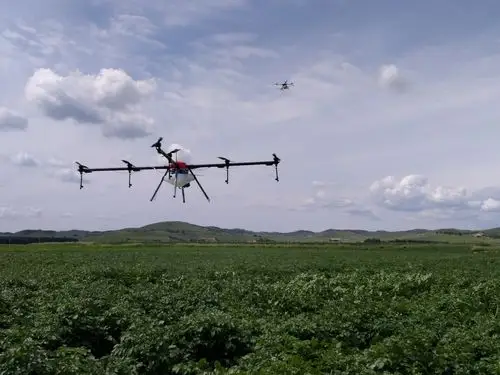
The large-scale application of industry level drones in agricultural crop protection, logistics transportation, surveying and mapping, security monitoring and other scenarios is the core logic of global market growth. Taking the Chinese market as an example, the market size of commercial drones in 2024 is about 121.5 billion yuan, of which the market sizes of agricultural and forestry crop protection, surveying and mapping, and security monitoring are 28.1 billion yuan, 26.8 billion yuan, and 15.7 billion yuan, respectively, accounting for 23%, 22%, and 13%; The market size of logistics and transportation has reached 12.8 billion yuan, with an annual growth rate of 32%, demonstrating strong growth potential in industry level application scenarios.
Technological Evolution and Core Trends
The global evolution path of unmanned aerial vehicle technology shows significant cross domain integration characteristics, accelerating the transition from early single hardware innovation centered on endurance improvement and payload enhancement to multi-dimensional system integration direction of "AI+energy+communication". This transformation has propelled technological efficiency from local optimization to global leap, which is reflected in the collaborative innovation of hardware and algorithms such as modular architecture design (such as DJI replaceable task platform) and deep integration of artificial intelligence (such as Huawei Cloud AI training platform, which achieves recognition accuracy approaching 99%), as well as in the deep integration of energy revolution (such as hydrogen fuel cell endurance exceeding 5 hours) and communication technology. With the maturity of AI visual recognition, edge computing and anti-interference communication, American UAV technology has evolved from a "flight camera" to an intelligent unit with independent decision-making capability; The HX-2 strike drone from European company Helsing utilizes onboard AI and Altra reconnaissance and strike software to achieve electronic warfare resistance and multi aircraft swarm control, marking a breakthrough in cross domain collaboration capabilities.
The breakthrough of hydrogen energy technology in core technological innovation has a disruptive impact on industry level application scenarios. China has shown outstanding performance in this field: the 50 kilogram hydrogen powered unmanned aerial vehicle jointly developed by AVIC Chengfei and Tsinghua University has completed a 30 hour long endurance flight across day and night, breaking through the integrated design technology of flight, engine and control. Its endurance has reached the international leading level, and non-standard runway deployment has been achieved through the "unmanned vehicle+unmanned aerial vehicle" system; The first tonnage liquid hydrogen electric vertical takeoff and landing unmanned aerial vehicle in China, with a takeoff weight of 1.2 tons and a potential range of 1000 kilometers, has verified the feasibility of liquid hydrogen in heavy load aviation scenarios. The "Attacker" hydrogen powered drone from Israeli company Hiven utilizes modular dual body design and on-site hydrogen production technology to achieve a 10 hour endurance and energy independence, driving the expansion of the second growth curve in low altitude logistics, emergency rescue, and other scenarios.
The maturity of AI flight control and autonomous decision-making technology has accelerated the application and penetration of drones in complex environments. The Huawei Cloud AI Training Platform has achieved an accuracy rate of nearly 99% in target recognition. The American Raytheon "Coyote" LE SR drone has the ability to autonomously cooperate and dynamically adjust tactics, and can launch and intercept multiple types of threat targets from unmanned underwater vehicles; The new generation stealth unmanned combat aerial vehicle (UCAV) of Dassault Aviation in France inherits the experience of the "neuron" technology verification aircraft and achieves coordinated combat with the "Rafale" F5, reflecting a breakthrough in autonomous flight and manned unmanned coordination. In the global market, the Fully Autonomous sub segment has rapidly grown in reconnaissance and attack tasks due to its low latency decision-making and risk minimization advantages. BVLOS operations, on the other hand, have benefited from advances in obstacle avoidance systems and relaxed regulations, becoming the core technical support for scenarios such as border patrols and pipeline inspections.
The integration of communication and network technology provides ubiquitous connectivity capabilities for drones. The application of 5G-A/6G carrier aggregation, low orbit satellite direct connection, and quantum encryption transmission technology significantly reduces signal delay and enhances transmission stability; Chinese hydrogen energy drones are equipped with 5G onboard modules, which can transmit telemetry data and mission images in real-time to remote platforms through the public network. In addition, the development of modular architecture design (such as DJI replaceable task platform) and open source ecosystem (PX4 open source flight control developers exceeding 100000) has promoted technological openness and system level application innovation, giving rise to emerging fields such as urban air traffic (UAM).
The globalization of technical standards is reshaping the market competition landscape. The EU EN 18031 cybersecurity certification will be mandatory in August 2025, requiring unmanned aerial vehicles to have anti network attack capabilities and security update mechanisms, and firmware upgrades to comply with regulatory requirements such as EASA. Such standards not only promote technological compliance, but also encourage enterprises to incorporate data security (encrypted transmission), high-precision data processing (hyperspectral imaging, RTK GPS), and other research and development priorities, accelerating technological collaboration and competitive differentiation in the global market.
Analysis of the Development of Drone Industry in Mainstream Countries/Regions
The United States: Military Technology Leadership and Policy Driven
The US drone industry is driven by military applications as its core driving force, consolidating its strategic position through technology research and development and policy enforcement measures, while presenting a structural contradiction between leading high-end technology and insufficient mass production capabilities. In the military field, the United States focuses on developing unmanned aerial vehicle systems with multifunctional combat capabilities, supported by advanced technology. For example, the "Coyote" LE SR drone developed by Raytheon Company achieved its first helicopter launch in March 2025 at the Nine Mile Training Center, capable of performing reconnaissance, surveillance, electronic warfare, and precision strike missions. The US Army continues to increase its procurement efforts for this system, signing contracts worth $75 million (600 2C interceptors), $237 million (KuRFS and "Coyote" systems), and $197 million (production until September 2027) since 2024. It plans to purchase 6000 sets of Block 2 kinetic interceptors, 700 sets of Block 3 non kinetic interceptors, and supporting launch systems between 2025 and 2029, with a budget request of $116.3 million for the fiscal year 2025. This type of equipment reflects the technological advantages of the United States in the fields of AI cluster warfare and electronic warfare. The "Coyote" series has autonomous collaboration capabilities and its development direction is clearly aimed at high-end military applications that are intelligent and multifunctional.
At the policy level, the United States enforces the production of domestic drones through legislation and executive orders, particularly focusing on the competition for dominance in the field of small drones. In June 2025, Trump signed an executive order titled "Releasing the Dominance of US Drones," which explicitly stated the goal of achieving US military dominance in the field of small drones by 2027; In July of the same year, US Secretary of Defense Hagibis issued a memorandum titled "Unleashing the Advantage of US Military Drones", which comprehensively reformed the military drone strategy and placed it on an equal priority with main combat weapon systems. In addition, the United States has promoted regulatory framework optimization through the FAA Reauthorization Act, requiring the FAA to develop unified BVLOS operating rules by 2024 to replace inefficient exemption systems and pave the way for the large-scale application of drones in public safety, logistics, and other fields.
However, the US consumer and commercial drone markets are constrained by China's technological advantages, and the domestic substitution process faces challenges. Chinese companies have long dominated the US market, and as the world's largest drone manufacturer, DJI's commercial drone sales account for over 50% of the US market, with a consumer market share exceeding 80%. Although the United States has passed legislation to restrict the access of Chinese drones, such as Biden signing a bill in December 2024 to ban the sale of new drones from DJI and Daotong, and the House of Representatives pushing for a comprehensive ban in 2025, local companies such as Skydio and Brinc still find it difficult to compete with Chinese companies in terms of cost and technological maturity.
The core contradiction of the US drone industry lies in "leading technology but insufficient mass production". On the one hand, it maintains advantages in high-end technology fields such as AI clusters and electronic warfare, such as the development and deployment of the "Coyote" Block 3 non kinetic interceptor; On the other hand, small drones have problems such as high cost and supply chain dependence. Taking the "Coyote" system as an example, the procurement cost of a single set of kinetic energy interceptors is relatively high. The $197 million contract in September 2024 only covers production needs until 2027, while China achieved low-cost mass production during the same period with a mature consumer grade drone industry chain, forming a sharp contrast. This contradiction requires the United States to continuously address the dual challenges of local production capacity and technology conversion efficiency in pursuit of the goal of small unmanned aerial vehicles dominating by 2027.
Europe: Regulatory Priority and Regional Synergy
Overall framework of the European Union
The EU drone industry regulation is based on the core logic of "security and privacy", balancing market development and risk prevention by building a unified standard and strict compliance system. In terms of unified authentication standards, the EU has promoted the compulsory implementation of EN 18031 network security certification from August 1, 2025. The standard is divided into two parts: EN 18031-1 and EN 18031-2. The former requires network attack prevention (such as DDoS protection, communication encryption), security update mechanism (supporting firmware vulnerability repair and update package verification) and key management (encryption key safe storage and update) functions for radio equipment with Internet connection (including UAVs); The latter targets drones that process personal data, with strengthened privacy protection requirements such as access control, data encryption, and logging. This unified standard has been included in the list of coordinated standards for the Radio Equipment Directive (RED), and products that have not been certified will not be able to obtain CE-RED certification, facing market bans, product recalls, and fines of up to 4% of annual revenue. This move not only reduces the barriers to market access within the EU, but also increases the cost of enterprises due to compliance requirements such as third-party certification, which may constrain innovation speed.
The European Union implements unified regulatory rules through the European Aviation Safety Agency (EASA), which apply to all EU member states and countries such as Switzerland, Iceland, Norway, Liechtenstein, etc. Users within the EU are required to register in their country of residence, while non EU users can use the rules across the EU by registering in the first European country they fly to. In terms of flight rules, the European Union implements classified management for drones, with open categories divided into A1, A2, and A3 subcategories. Uniform requirements include a maximum flight altitude of 120 meters, flying within line of sight (with a horizontal distance of about 250 meters, adjustable according to size), and prohibiting flying above crowds. Drones weighing over 250 grams must be registered and hold an EU license, while C1 and above labeled drones are required to use remote ID broadcasting operator numbers. In addition, the EU has issued multiple supporting regulations to refine regulatory details, including revising information security risk management systems, air traffic management rules, etc., forming a compliance framework covering the entire design, production, and use chain.
In the field of defense and security cooperation, the EU embodies regional defense strategies through joint procurement and border control coordination. For example, the European Union has signed a 100 million euro drone contract for identifying ships carrying immigrants in the Mediterranean. The contract is divided into two parts: one part is jointly signed by Airbus and Israel's state-owned aerospace industry company (IAI), and the other part is signed with Israel's private arms company Elbit Systems. The related operations will be carried out in southern European countries such as Greece, Italy, and Malta as an important component of external border control measures. The budget of the European Border and Coast Guard Agency (Frontex) has increased from 6 million euros in 2005 to 460 million euros in 2025, reflecting the strategic importance of drones in EU joint border monitoring. The real-time data flow and sharing capabilities they provide have become key support for regional security coordination.
France and Germany
France and Germany, as the core countries of the European drone industry, have shown significant differentiated development paths, focusing respectively on military high-end and civilian scenario, reflecting Europe's dual strategic demands in the fields of "defense autonomy" and "livelihood applications".
France focuses on high-end military drones as its core development direction, with a key breakthrough in stealth technology and manned unmanned collaborative combat capabilities. Dassault Aviation is advancing the development of a new generation of large stealth unmanned combat aerial vehicles (UCAVs), led by the French Defense Procurement Agency (DGA). The project inherits the stealth and autonomous flight experience of the "neuron" technology validation aircraft and plans to achieve its maiden flight by 2030, forming a collaborative combat capability with the "Rafale" F5 fighter jet by 2033. The new UCAV has multiple advanced features: it adopts stealth design, is equipped with an air refueling system to be compatible with Airbus A330MRTT refueling aircraft, has ship based takeoff and landing capabilities (similar to the "Rafale" Navy type), weighs about 17.5 tons, is equipped with M88 engines, and the weapon compartment can be filled with air-to-air missiles, highlighting its positioning in long-range precision strikes and air superiority competition. The Russia-Ukraine conflict has further accelerated the large-scale production of French military UAVs. The French Ministry of Defense has promoted the civil industry (such as automobile manufacturing) to participate in the production of short-range remote control ammunition (MTO) UAVs by simplifying procurement procedures. The goal is to deliver thousands of such UAVs within a few months. The flight and operation distance of such UAVs exceeds 100 kilometers, which can meet the needs of rapid deployment in the battlefield. In addition, France has strengthened its air capabilities through international cooperation. In 2025, it signed contracts with five companies including Aura Aero and Daher to invest approximately 10 million euros in the development of medium to high altitude long endurance unmanned aerial vehicles to fill the gap in Europe's air surveillance and attack capabilities after the delay of the Eurodrone MALE UAV project. At the regulatory level, France implements strict management of drones, stipulating that drones weighing over 250 grams or equipped with cameras must be registered on the official website of the Civil Aviation Administration of China. After registration is completed, a registration code must be marked, and unregistered flights will face fines; Flight restrictions include no fly zones (urban areas, near airports, etc.), line of sight operations, and nighttime flight bans to balance safety and privacy needs.
Germany focuses on innovative applications in civilian scenarios, forming distinctive advantages in fields such as medical distribution and industrial inspection, and promoting commercialization through improved regulations and strategic planning. In the field of medical delivery, hospitals in Baden-W ü rttemberg have deployed Diaven drones to regularly transport blood samples. The drone has a maximum payload of 500 grams, a flight speed of 60 kilometers per hour, and is equipped with an insulated and waterproof transport cabin and rescue system. The 20 kilometer journey only takes a dozen minutes, saving clinics over 100000 euros in transportation costs and reducing carbon emissions annually. To support the large-scale application of civilian drones, the German Federal Ministry of Digitalization and Transport has proposed an advanced air traffic strategy, which is planned to be promoted in four stages: constructing test routes in 2026, designating exclusive airspace in 2028, integrating into regional transportation networks in 2030, and achieving nationwide application in 2032; Simultaneously launching a digital platform for unmanned aerial vehicles, integrating operational information, regulatory processes, and flight area mapping tools to provide safe driving guidance for operators. In terms of regulatory system, Germany strictly implements the EU drone regulations, requiring all drones with cameras or weighing over 250 grams to be registered (natural person registration fee of 20 euros, legal person 50 euros), and operators must purchase liability insurance; Operations are classified into open categories and specific categories based on risk levels, with the latter requiring an application for an operating license. In addition, Germany has taken innovative measures to ensure airspace security. In January 2025, a proposal to amend the Aviation Safety Act was passed, allowing the Federal Armed Forces to shoot down illegally flying drones in the face of the threat of "particularly serious accidents" to address the espionage or sabotage risks faced by critical infrastructure and military facilities. Although mainly for civilian use, Germany also has a presence in the field of military drones, such as the "OWE-V" cruise missile developed by Stark, which has autonomous navigation and anti-interference capabilities, an attack radius of 100 kilometers, and supports cluster deployment; Helsing Company has built a flexible factory (RF-1) with a monthly production capacity of over 1000 HX-2 strike drones, which can be expanded to tens of thousands of units during conflicts, demonstrating its supplementary capabilities in defense autonomy.
The differentiation path between France and Germany is essentially a manifestation of Europe's dual demands for "defense autonomy" and "livelihood applications": France strengthens Europe's strategic autonomy in the defense field through high-end military drone research and development such as stealth technology and manned unmanned collaboration; Germany, on the other hand, relies on innovation in civilian scenarios such as medical delivery and industrial inspections to explore the path of drones improving people's well-being. The two complement each other and jointly promote the development of the European drone industry towards diversification and high added value.
Israel: Military Technology Export and Innovation Ecology
The core competitiveness of Israel's drone industry lies in its unique "military technology commercialization" model, which uses practical experience as the engine for technological iteration. Through continuous military demand traction and commercialization transformation, it forms a closed-loop ecosystem of "research and development - practical combat - output". The long-term conflicts in the Middle East have provided a natural testing ground for Israeli drone technology. For example, the "Hermes 900" drone was first deployed in the 2014 Gaza War and has been continuously optimized through issues exposed in actual combat, such as the shooting down of a Hezbollah surface to air missile in April 2024. Its endurance has been increased to over 30 hours, with a maximum flight altitude of 9100 meters and a payload capacity of 300 kilograms. It can carry multi mission equipment such as electro-optical/infrared sensors and synthetic aperture radar. Currently, it has been deployed in the 147th "Ram" Squadron of the Israeli Air Force to carry out targeted strikes and border surveillance missions. This technology iteration path based on actual combat has given Israel a significant advantage in the field of medium to high altitude long endurance unmanned aerial vehicles. For example, the "Egret TP" of the Elbit system has a range of over 30 hours and a ceiling of 45000 feet, with high stealth and multi mission capabilities. Germany has purchased this model for Baltic monitoring and jointly established an operator training center with Israel.
Military technology output is an important pillar of Israel's drone industry, and its products occupy the global market with proven reliability in actual combat. The "Egret" series of unmanned aerial vehicles from Israel Aerospace Industries (IAI) have been exported to multiple countries including Germany and Greece. The "Egret MK II" is specifically designed for intelligence, surveillance, target acquisition, and reconnaissance (ISTAR) missions, with a range of over 30 hours, and can carry electronic warfare equipment to perform signal interception and jamming tasks. Kawasaki Heavy Industries in Japan is currently testing and evaluating it. In the field of unmanned underwater systems, the "Blue Whale" unmanned underwater platform developed by Elta Systems, a subsidiary of IAI, is 11 meters long, weighs 6 tons, has a range of up to 4 weeks, and a depth range of 300 meters. It has been exported to the Greek Navy for anti submarine warfare, mine sweeping, and special forces support. In addition, the EU Mediterranean drone monitoring project also uses Israeli products, with the "Egret" drone covering a distance of 1000 miles and the "Hermes" series having a range of 36 hours, further consolidating its position in the international market.
The diversified layout of the innovation ecosystem injects sustained momentum into the Israeli drone industry. In the field of cutting-edge technology, the "Attacker" hydrogen powered unmanned aerial vehicle launched by Haiwen Company has achieved technological breakthroughs, achieving a 10 hour endurance and a 23 kilogram payload capacity through on-site hydrogen production technology. It has low detectability and modular design, suitable for continuous monitoring and troop protection scenarios, and is regarded as a "force multiplier". The industrial structure presents the characteristics of military civilian integration. Eight Israeli companies have entered the "2025 Top 100 Unmanned Aerial Defense Companies" list, covering military, civilian, and cutting-edge technology fields: the "Hermes" series of Elbit Systems (ranked 5th), the "Hero" series of patrol ammunition from UVision (ranked 38th) (such as the "Hero 1250" with a range of 200+kilometers), the AI autonomous tactical drone from XTEND (ranked 41st) (supporting GNSS denial environment navigation and cluster operations), and the independent launch reconnaissance drone from Perception (ranked 29th), forming a complete industrial chain from core technology research and development to diversified product output.
The closed-loop ecosystem of "research and development, practical operation, and output" in Israel's drone industry has formed a virtuous cycle by iterating technology through practical experience, and technology output feeding back R&D investment. Its drone fleet exceeds 1000, contributing over 10% of global market sales to the industry. The government's "Unmanned Systems Plan by 2025" policy further promotes the development of over 170 products by more than 50 companies, covering cutting-edge fields such as hydrogen energy, AI autonomy, and unmanned underwater vehicles, continuously consolidating its position as a global leader in drone technology.